Chun-Jen Huang

Zwitterionic silatrane bio-interfaces for single-molecule imaging
Started on January, 2021
Website
Google Scholar
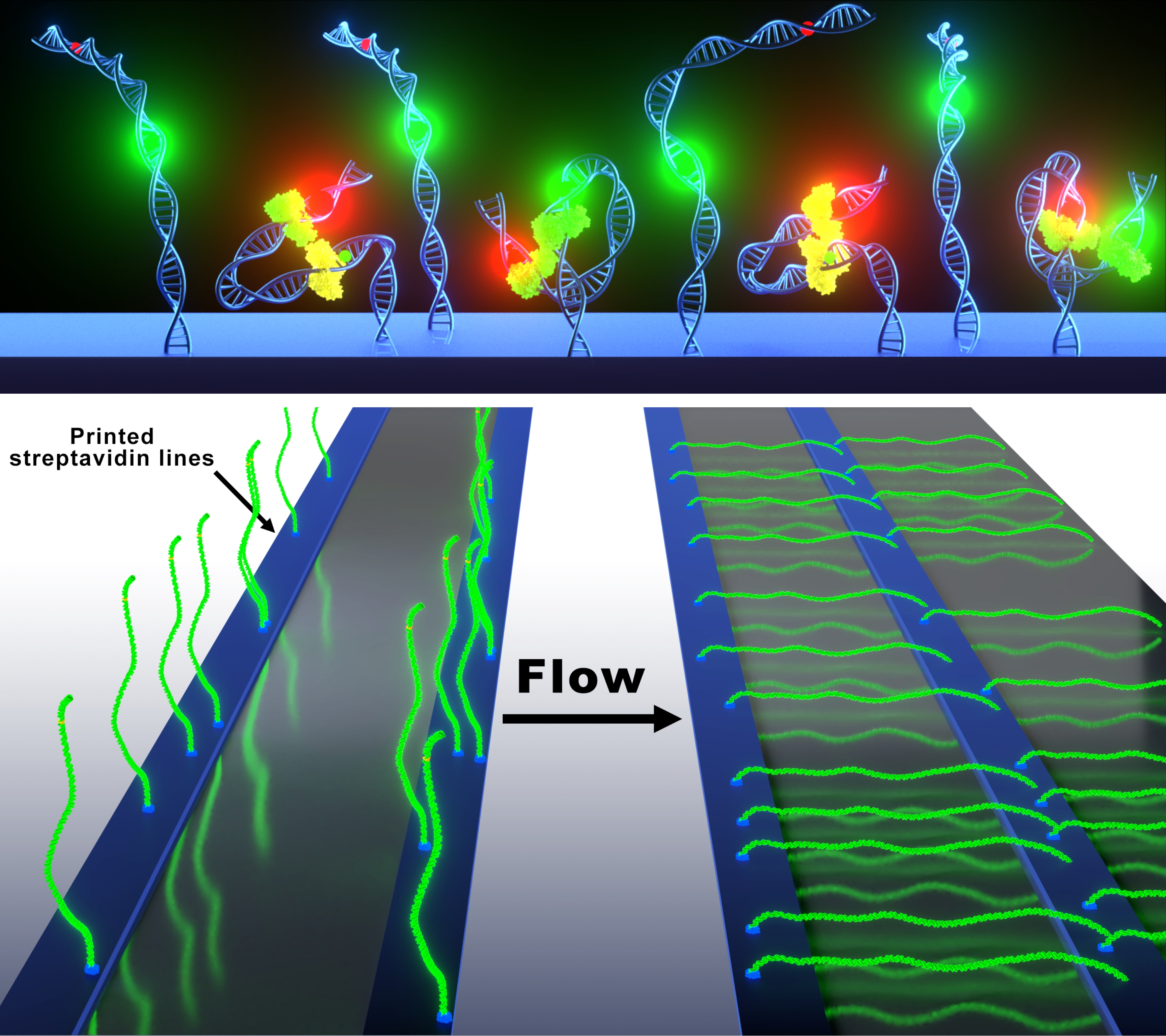
Our group at the Vilnius University Life Sciences Center actively collaborates with Prof. Chun-Jen Huang’s team at National Central University (Taiwan). This partnership bridges advanced biophysics and single-molecule fluorescence microscopy (VU) with innovative biomaterial chemistry and surface modification techniques (NCU). Together, we focus on engineering ultra-low-fouling glass flowcells to overcome severe background noise and non-specific adsorption—the primary physical barriers in single-molecule imaging.
Our joint research has established new functional silatrane-based surface chemistries that yield thin (<3 nm), homogeneous, antifouling coatings with >95% protein rejection:
Biotin-Silatrane Bio-Interfaces: Developed novel biotin-functionalized silatranes for specific molecular anchoring without non-specific background ACS Appl. Mater. Interfaces.
Sulfobetaine & Aminopropyl-Silatranes: Designed ultra-thin zwitterionic coatings that prevent non-specific protein binding in complex biophysical assays FEBS openbio.
Live-Cell & In Vitro Applications: Applied sulfobetaine- and aminopropyl-silatrane substrates to high-resolution single-molecule studies of protein complexes Cell Research / Nature Springer.
We are currently expanding our bilateral consortium and solving the problems often faced whe performing single-particle tracking of integral membrane proteins in living cells.